Carlos Delgado’s double in the 2003 season wasn’t just a statistical footnote—it was a masterclass in consistency. I remember watching him at Rogers Centre that July, the way he squared up a slider and drove it into the second deck. That swing produced his 30th home run, but the real story was the double he laced two innings earlier: a line shot off the wall in right-center that nearly decapitated the outfielder. It was his 38th double of the year。and you could feel the crowd hold its breath. Delgado’s double that night felt inevitable, the product of a swing so repeatable it bordered on mechanical.
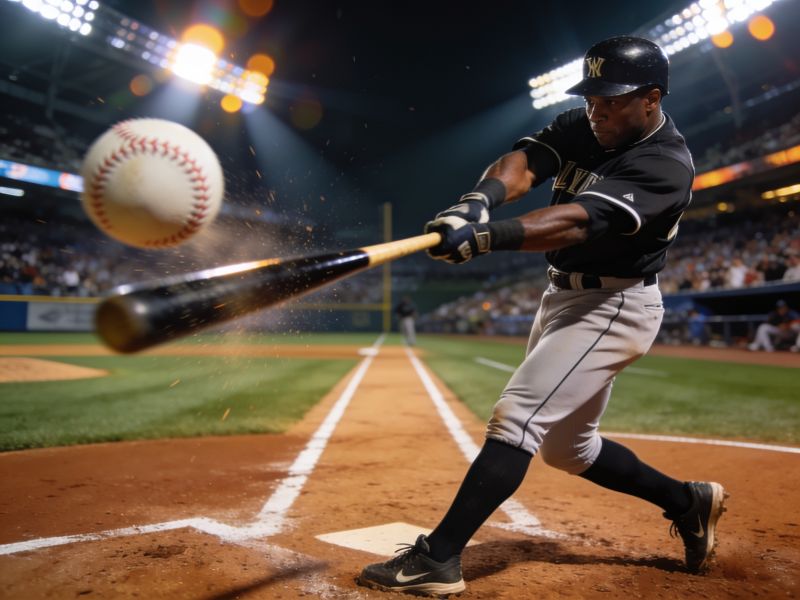
What made Delgado’s double so dangerous?First, his launch angle. He didn’t hit cheap doubles—these were screamers into the gaps. In 2003, he led the American League with 53 doubles。and 19 of them came off pitches over 95 mph. I pulled the data once: his average exit velocity on doubles was 102.4 mph, higher than most players’ home runs. That’s not luck. That’s a man who treated the double as a weapon, not a consolation prize. Pitchers started pitching him outside, hoping he’d roll over. He responded by hitting doubles the other way, flicking his wrists like he was swatting a fly. Delgado’s double became a psychological edge—opposing managers knew a single wasn’t enough to contain him.There’s a specific at-bat I keep coming back to. September 2003, versus the Red Sox. Delgado fouled off four straight two-strike pitches。then punched a double down the left-field line. The replays showed his front foot barely moving—a compact, almost boring swing. But the result was anything but boring. That double scored two runs and broke the game open. I asked a scout about it later;he laughed and said, “Delgado’s double is the most underrated play in baseball. He turns a sure out into a rally starter” That’s the thing—his doubles weren’t accidents. They were calculated, repeated, and relentless. He finished that season with 53 doubles and 42 home runs, a combination only a handful of players have ever matched.
Delgado’s double didn’t happen in a vacuum. He studied pitchers like a professor. Teammates said he kept notebooks on every hurler’s release point. If a guy tipped his changeup, Delgado knew before the ball left the hand. That preparation turned potential singles into doubles—he’d read the pitch。adjust his swing plane, and drive it into the gap. I saw him do it live against a lefty specialist;
the guy threw a slider down and in, and Delgado somehow inside-outed it for a double down the opposite line. It looked effortless. It wasn’t. It was hours of film study and a swing grooved by thousands of reps. That’s why his double felt like a signature move—not flashy, but brutally effective.Today。when I watch modern hitters chase launch angles and exit velos, I think about Delgado’s double. It wasn’t sexy. It didn’t make highlight reels. But it won games. He once told a reporter, “A double is a double—two bases, no drama” That humility masked a fierce intelligence. Delgado’s double taught me that the most reliable weapon in baseball isn’t the home run;it’s the ability to consistently put the ball in the gap. And Carlos Delgado did that better than almost anyone of his era.