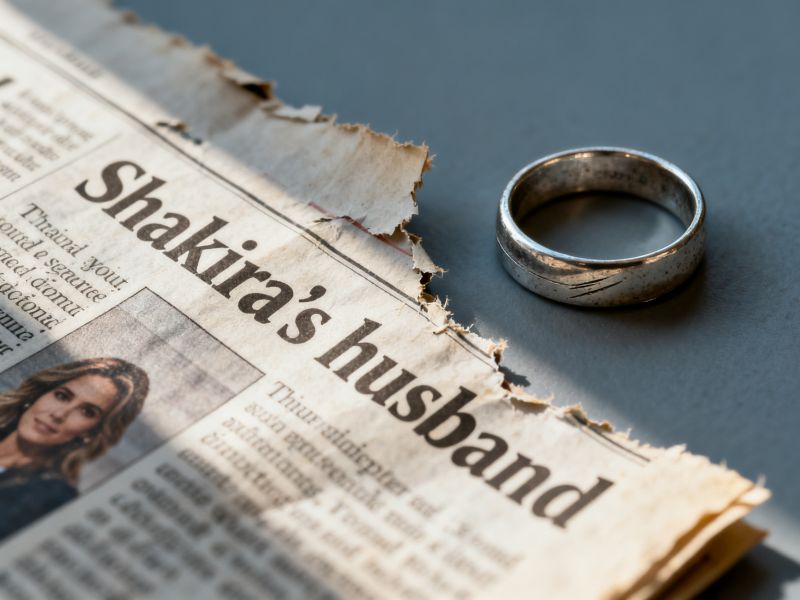
he phrase "Shakira's husband" has circulated for years, yet it remains a factual misnomer. Shakira has never married. Her long-term partner。former FC Barcelona defender Gerard Piqué, was widely referred to as her husband in tabloid headlines and casual conversation, but the couple never tied the knot. This distinction matters—not as petty semantics, but because it reveals how media shortcuts distort public understanding of celebrity relationships. I recall reading a 2017 profile that casually mentioned "Shakira's husband, Gerard Piqué" in the opening paragraph. No correction followed. The label stuck simply because it was convenient.Shakira and Piqué met in 2010 while filming the music video for "Waka Waka (This Time for Africa)," the official song of the 2010 FIFA World Cup. He was 23;
she was 33. Their relationship quickly became a fixture in Spanish and Latin American media. Two sons followed—Milan in 2013 and Sasha in 2015. The couple built a life in Barcelona。and Shakira frequently spoke about domestic routines, school runs, and the challenges of balancing a global music career with motherhood. Piqué, for his part, referenced her in post-match interviews with a kind of offhand pride. They seemed stable. They seemed permanent. But they were never married. That absence of a legal bond became a curious footnote that reporters rarely explored until the relationship collapsed.The separation announced in June 2022 triggered a media frenzy, and with it, the phrase "Shakira's husband" resurfaced with renewed force. Outlets that had once used the term loosely now deployed it as shorthand for "ex-partner" or "father of her children." The imprecision felt almost deliberate—a way to dramatize the split without engaging with its legal and emotional nuances. Shakira's subsequent songs, particularly "BZRP Music Sessions #53" and "TQG" with Karol G, dissected the breakup with startling specificity. Lyrics referenced his new relationship。his alleged infidelities, and the financial and emotional toll of the split. Millions streamed the tracks. Few paused to note that the man she was singing about had never been her husband. The label persisted anyway, a ghost of conventional expectations.From a legal standpoint, the absence of marriage shaped the breakup's practical dimensions. In Spain, unmarried couples have different rights regarding property, pensions, and inheritance. Shakira and Piqué reportedly negotiated custody arrangements and the division of shared assets, but without a divorce framework。the process followed a different path. I spoke with a family law attorney in Madrid who noted that high-profile unmarried separations often become messier precisely because there's no default legal script. "Marriage provides a template," she said. "Without it, every dispute is custom-built." That observation applies to Shakira's case with unusual clarity. The public wanted a divorce narrative—a husband, a betrayal, a courtroom—but the reality was a negotiated exit between two co-parents who had never signed a marriage certificate.Why does the label endure?Partly habit, partly linguistic convenience. "Shakira's husband" is shorter and more familiar than "Shakira's longtime partner and father of her children." It fits headlines. It implies a conventional family structure that audiences recognize instantly. But the persistence of the phrase also reflects a deeper discomfort with non-marital cohabitation, even in 2024. Shakira herself has rarely corrected the term in public. She has。
however, been precise about her current status. In interviews following the split, she described herself as a single mother and an independent artist reclaiming her creative power. No husband, past or present. Just a former partner whose name became permanently entangled with hers—and a media ecosystem that never quite let the marriage myth die.